Monthly Inventory Summary
A
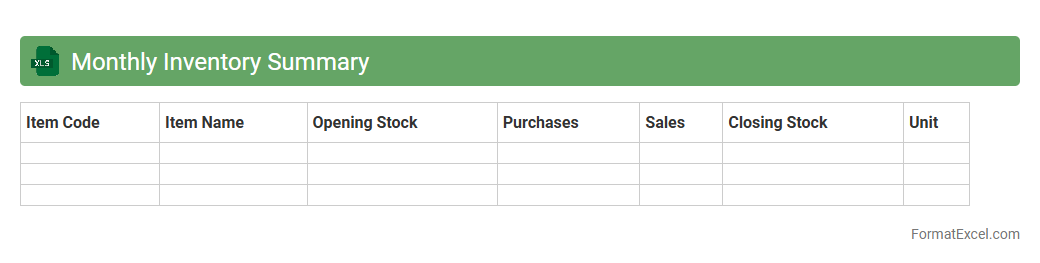
Monthly Inventory Summary Excel document consolidates data on stock levels, item movements, and inventory valuations over a specific month, providing a clear overview of current assets. It helps businesses track product availability, manage reorder points, and identify trends in consumption or stock discrepancies. Utilizing this summary enhances inventory accuracy, reduces holding costs, and supports informed decision-making for supply chain management.
Monthly Inventory Reconciliation
The
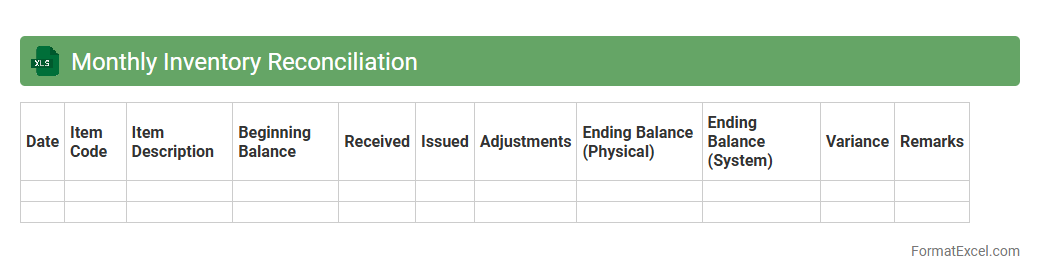
Monthly Inventory Reconciliation Excel document is a tool designed to systematically compare physical stock counts with recorded inventory levels, identifying discrepancies to ensure data accuracy. It helps businesses maintain precise inventory records, preventing stockouts, overstocking, and financial losses by highlighting variances for timely correction. This document supports better inventory management decisions and improves overall operational efficiency through regular monitoring and reconciliation.
Monthly Inventory Valuation
A
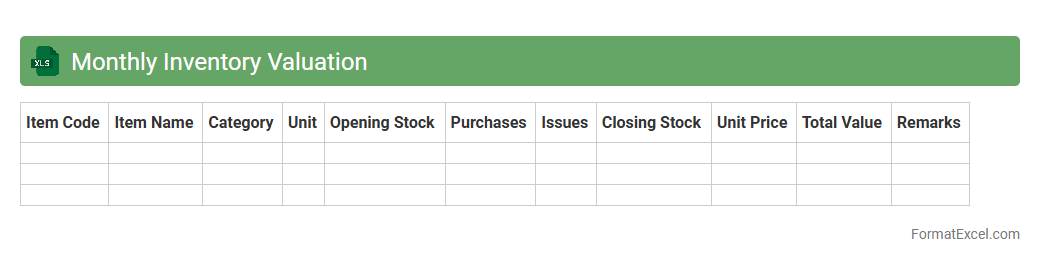
Monthly Inventory Valuation Excel document is a tool used to calculate the value of inventory at the end of each month by tracking stock quantities and costs. It helps businesses monitor inventory levels, assess cost of goods sold, and make informed decisions about purchasing and production. This document improves financial accuracy and supports efficient inventory management for maintaining optimal stock and profitability.
Monthly Inventory Receipts
The
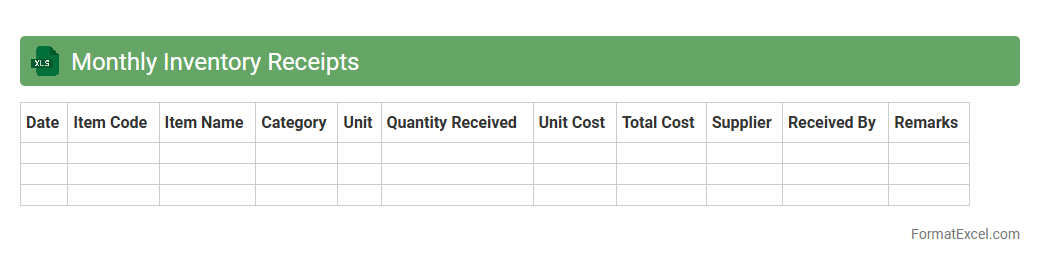
Monthly Inventory Receipts Excel document is a detailed record that tracks all incoming inventory items on a month-to-month basis, providing clear visibility into stock levels and supplier deliveries. It helps businesses monitor restocking patterns, identify discrepancies, and streamline procurement processes. This tool enhances inventory management efficiency by allowing accurate forecasting and preventing stockouts or overstock situations.
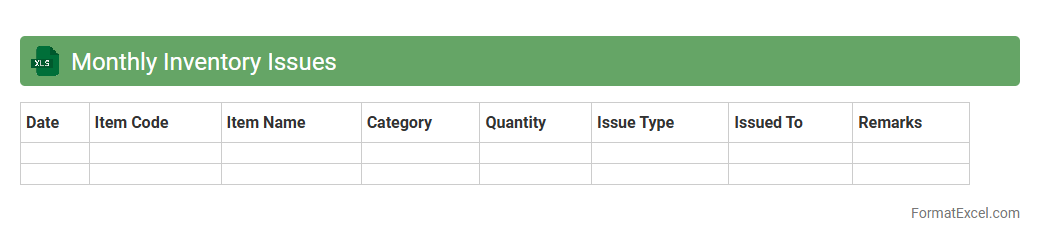
Monthly Inventory Issues
The
Monthly Inventory Issues Excel document is a detailed record tracking discrepancies, shortages, and damages in stock over a specific month. It helps businesses identify patterns in inventory problems, streamline stock management, and reduce losses by enabling timely corrective actions. Utilizing this document improves accuracy in inventory control and supports informed decision-making for procurement and warehouse operations.
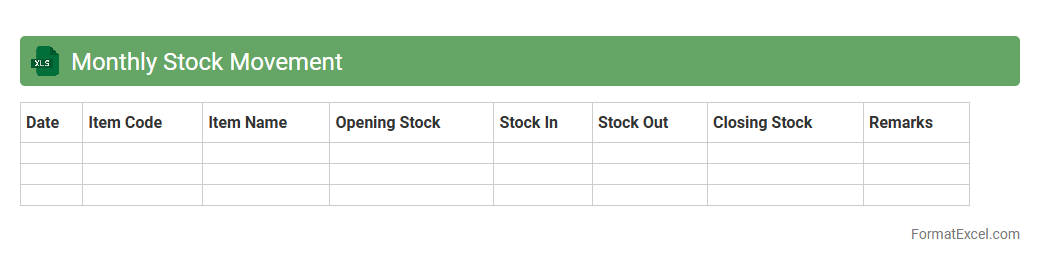
Monthly Stock Movement
The
Monthly Stock Movement Excel document tracks inventory changes by recording stock inflows, outflows, and balances on a monthly basis, allowing for accurate monitoring of product quantities. It helps businesses identify trends in stock usage, prevent stockouts or overstock situations, and optimize inventory management. By analyzing this data, companies can enhance purchasing decisions, improve cash flow management, and maintain efficient supply chain operations.
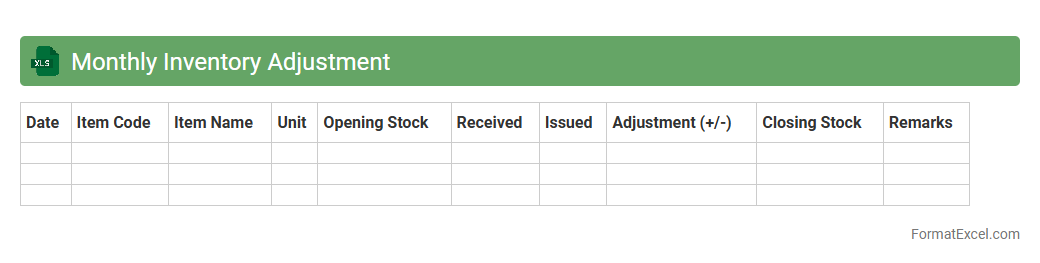
Monthly Inventory Adjustment
The
Monthly Inventory Adjustment Excel document is a critical tool for tracking changes in stock levels by recording discrepancies between physical inventory counts and system records. It helps businesses maintain accurate inventory data, identify shrinkage or overstock issues, and optimize purchasing decisions. Regular use of this document ensures financial reporting accuracy and supports effective inventory management strategies.
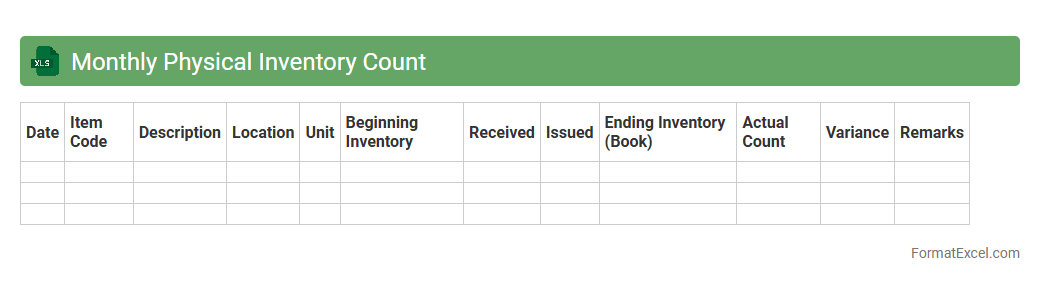
Monthly Physical Inventory Count
The
Monthly Physical Inventory Count Excel document is a structured tool designed to track and record the actual stock levels of products within a business at the end of each month. It helps identify discrepancies between recorded inventory and physical stock, enabling accurate financial reporting and optimized stock management. Using this document regularly improves inventory accuracy, prevents stockouts or overstock situations, and supports informed procurement decisions.
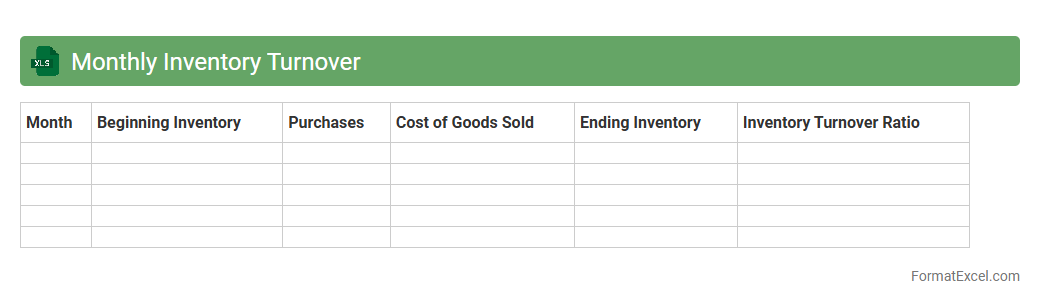
Monthly Inventory Turnover
A
Monthly Inventory Turnover Excel document tracks the frequency at which inventory is sold and replaced within a month, providing crucial insights into product demand and stock management. It helps businesses identify slow-moving items, optimize inventory levels, reduce holding costs, and improve cash flow. By analyzing turnover rates regularly, companies can make informed purchasing decisions and enhance overall operational efficiency.
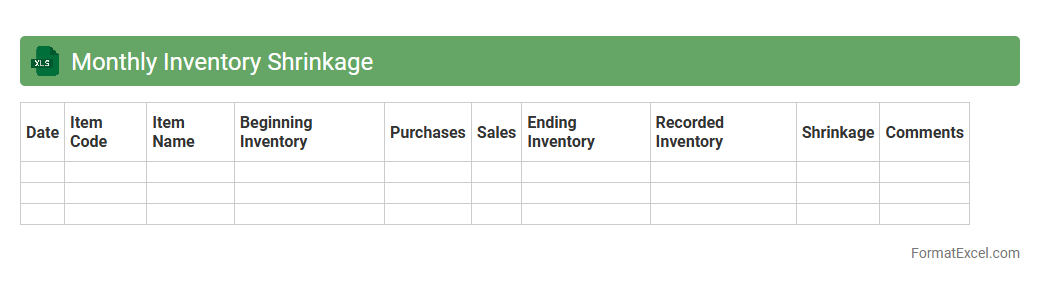
Monthly Inventory Shrinkage
The
Monthly Inventory Shrinkage Excel document tracks discrepancies between recorded inventory and actual stock levels, helping businesses identify losses due to theft, damage, or errors. It provides a clear, organized monthly summary of shrinkage data, enabling more accurate financial reporting and inventory management. Regular use of this document supports proactive decision-making to reduce inventory loss and improve operational efficiency.
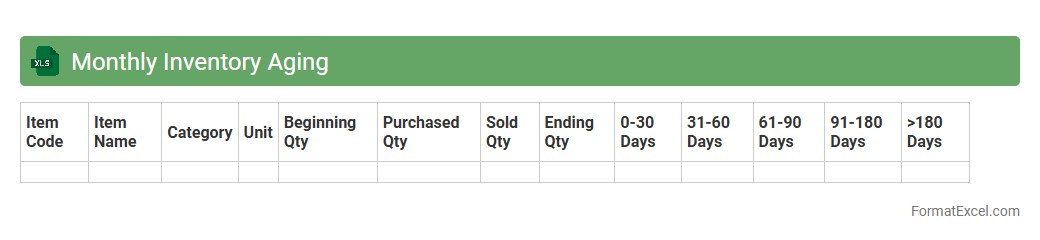
Monthly Inventory Aging
The
Monthly Inventory Aging Excel document tracks the age of inventory items by categorizing stock based on how long products remain unsold within specified time intervals. This tool enables businesses to identify slow-moving or obsolete inventory, facilitating better decision-making in purchasing, stock management, and cash flow optimization. Using this report helps reduce holding costs and improves overall inventory turnover rates, enhancing operational efficiency.
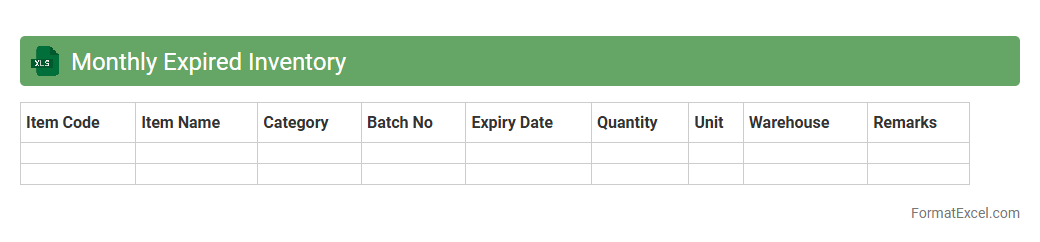
Monthly Expired Inventory
The
Monthly Expired Inventory Excel document tracks products that have passed their expiration dates within a specific month, helping businesses identify and manage obsolete stock efficiently. This tool enables accurate recording, analysis, and reporting of expired items to minimize financial loss and optimize inventory control. Leveraging this document supports improved decision-making for purchasing, stock rotation, and waste reduction strategies.
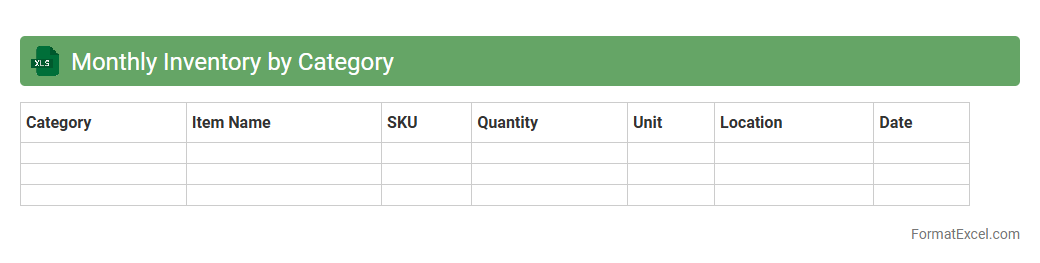
Monthly Inventory by Category
A
Monthly Inventory by Category Excel document organizes product stock levels into categorized groups, allowing businesses to track inventory changes over time efficiently. It helps identify trends, prevent stockouts or overstock situations, and supports accurate forecasting and budgeting. Using this tool streamlines inventory management, improving overall operational efficiency and decision-making.
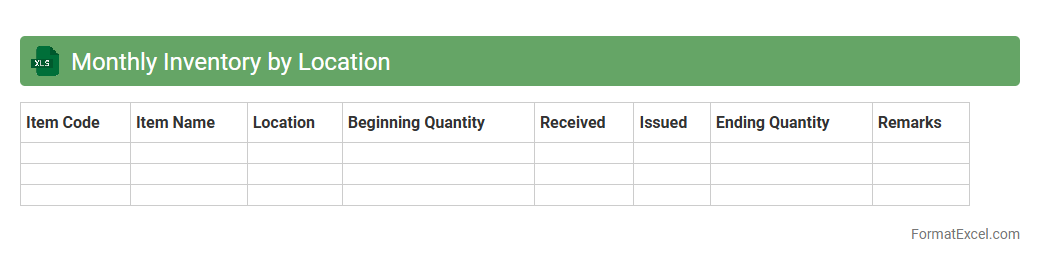
Monthly Inventory by Location
The
Monthly Inventory by Location Excel document tracks stock levels across multiple sites, enabling businesses to monitor and manage inventory accurately. It provides detailed insights into product availability, turnover rates, and discrepancies, which helps optimize ordering processes and reduce carrying costs. This tool supports efficient supply chain management by offering clear visibility into each location's inventory status, enhancing decision-making and operational efficiency.
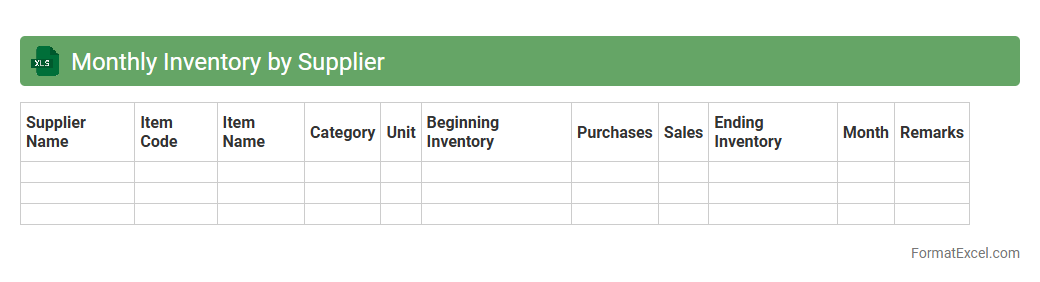
Monthly Inventory by Supplier
The
Monthly Inventory by Supplier Excel document tracks stock levels and purchase quantities from each supplier, enabling efficient inventory management and timely restocking decisions. It provides clear insights into supplier performance, helping to optimize procurement schedules and reduce holding costs. This tool supports accurate demand forecasting and improves communication between purchasing and warehouse teams.
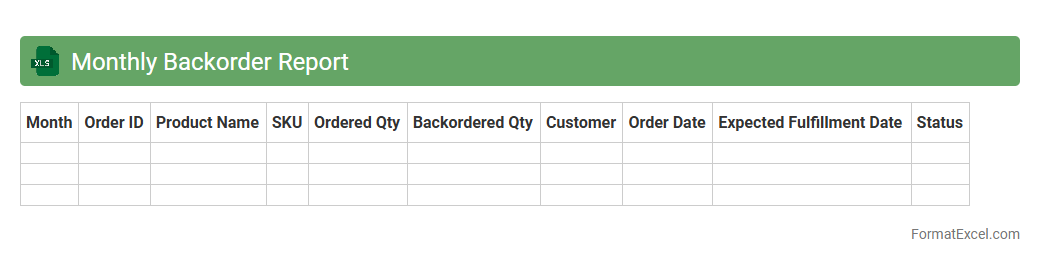
Monthly Backorder Report
The
Monthly Backorder Report Excel document tracks outstanding customer orders that have not yet been fulfilled within a given month, providing detailed data on product shortages and delivery delays. This report is essential for inventory management teams to identify trends in backorders, prioritize restocking efforts, and improve supply chain efficiency. By analyzing this data, businesses can enhance customer satisfaction through better order fulfillment and timely communication.
Monthly Overstock Report
The
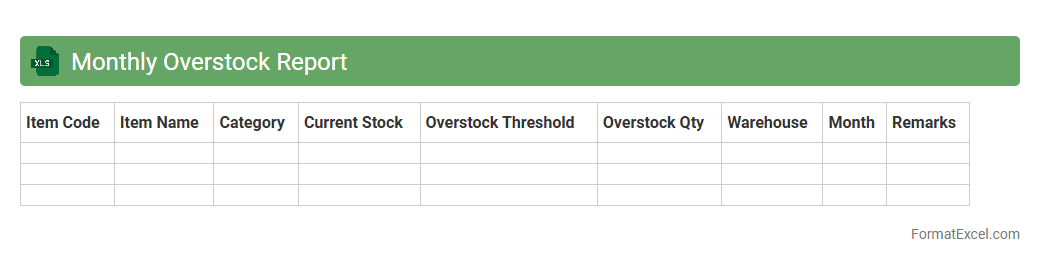
Monthly Overstock Report Excel document systematically tracks and analyzes inventory items that exceed optimal stock levels, helping businesses identify excess products. This report highlights overstocked items by category, quantity, and value, enabling informed decisions to reduce holding costs and free up warehouse space. Utilizing this tool enhances inventory management efficiency and supports better procurement and sales strategies.
Monthly Out-of-Stock Report
The
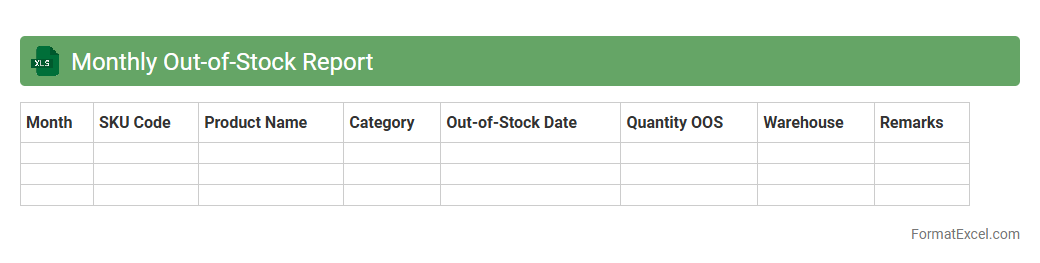
Monthly Out-of-Stock Report Excel document tracks inventory shortages by listing products that were unavailable each month, helping businesses identify supply chain issues and demand patterns. It provides detailed data on stockouts, enabling efficient restocking decisions, minimizing lost sales, and improving customer satisfaction. This report is essential for inventory management, forecasting, and optimizing procurement strategies.
Monthly Inventory Discrepancy
The
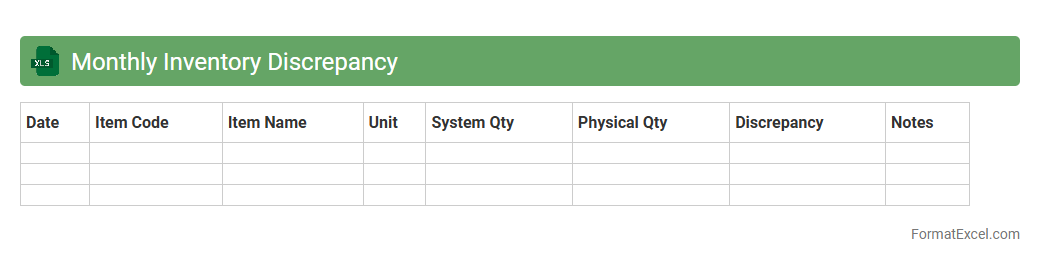
Monthly Inventory Discrepancy Excel document tracks and identifies differences between recorded inventory levels and actual stock counts over a monthly period. This tool helps businesses quickly spot inconsistencies caused by errors, theft, or damage, allowing timely corrective actions to maintain accurate inventory records. By providing clear, organized data, it supports improved inventory management, cost control, and informed decision-making for supply chain operations.
Monthly Inventory Forecast
The
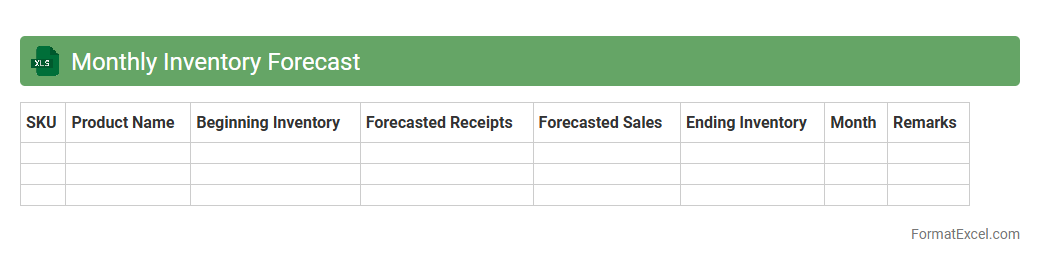
Monthly Inventory Forecast Excel document is a tool designed to project future inventory levels based on historical sales data and seasonal trends. It helps businesses optimize stock management by predicting product demand, reducing stockouts, and minimizing excess inventory. Using this forecast enhances operational efficiency and supports informed decision-making in procurement and supply chain planning.
Monthly Slow-Moving Inventory
The
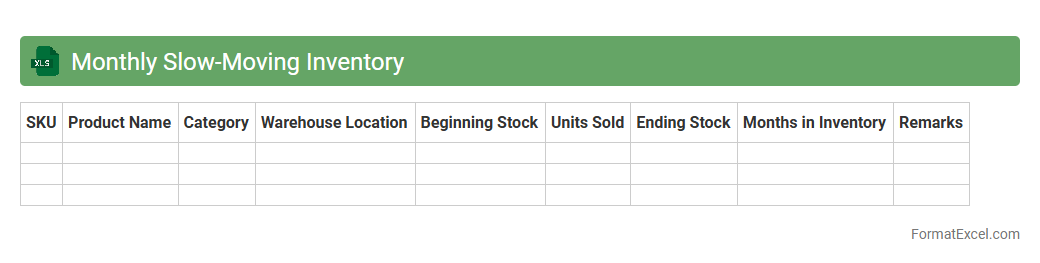
Monthly Slow-Moving Inventory Excel document tracks products with low sales velocity over a specified period, helping businesses identify items that tie up capital and warehouse space. By analyzing this data, companies can optimize inventory levels, reduce holding costs, and improve cash flow management. This tool is essential for streamlining supply chain operations and enhancing overall profitability.
Monthly Fast-Moving Inventory
The
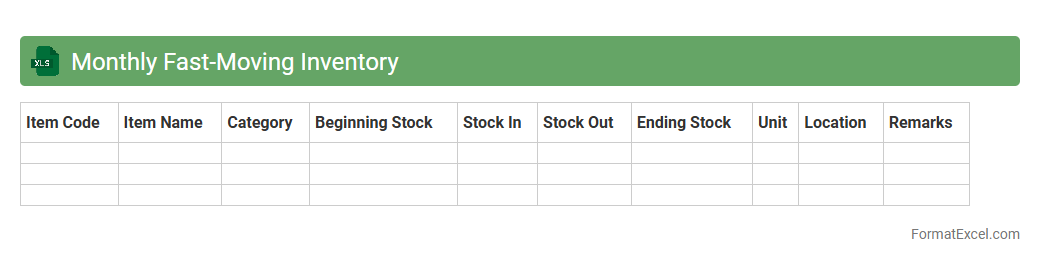
Monthly Fast-Moving Inventory Excel document tracks high-turnover products to optimize stock levels and reduce holding costs. It provides detailed insights into sales velocity, reorder points, and inventory turnover ratios, enabling efficient supply chain management. This tool streamlines decision-making by highlighting critical fast-moving items that require frequent replenishment.
Monthly Inventory Write-Off
The
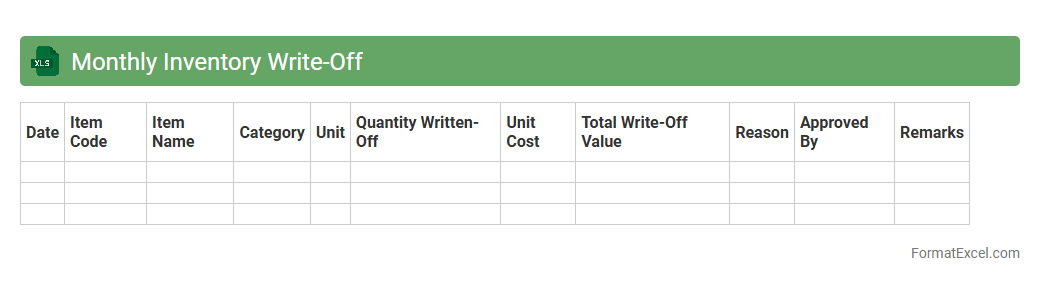
Monthly Inventory Write-Off Excel document tracks goods removed from stock due to damage, expiration, or loss, ensuring accurate inventory valuation. It helps businesses identify patterns in write-offs, optimize inventory management, and minimize financial discrepancies. Using this document aids in maintaining transparent accounting records and supports informed decision-making to reduce future inventory losses.
Monthly Inventory Transfer
The
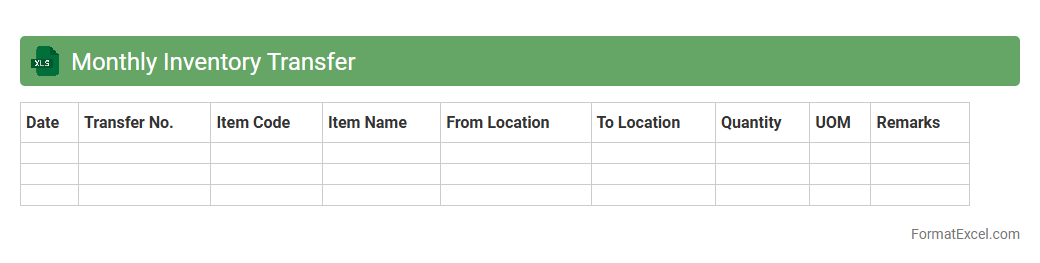
Monthly Inventory Transfer Excel document is a structured spreadsheet that tracks the movement of inventory between different locations or departments within a business on a monthly basis. It helps maintain accurate stock levels, reduces discrepancies, and provides clear visibility into inventory flow, enabling more efficient supply chain management. This document is essential for optimizing resource allocation, minimizing stockouts or overstock situations, and supporting financial reporting and audit compliance.
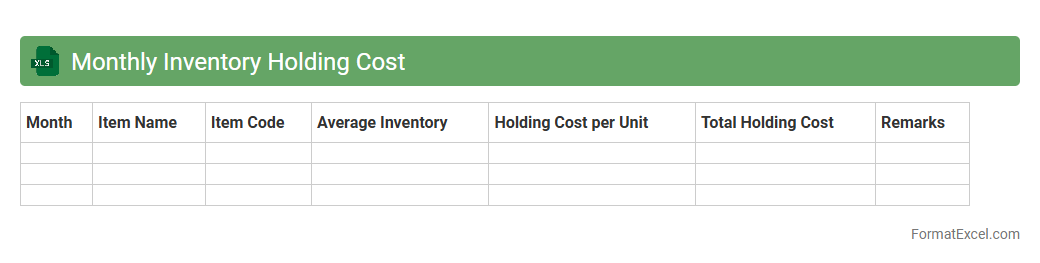
Monthly Inventory Holding Cost
The
Monthly Inventory Holding Cost Excel document tracks expenses related to storing and maintaining inventory, including warehousing, insurance, depreciation, and obsolescence costs. It helps businesses analyze cost trends, optimize stock levels, and improve cash flow management by providing clear visibility into monthly carrying costs. Using this tool supports data-driven decisions that reduce excess inventory and enhance overall operational efficiency.
Introduction to Monthly Inventory Tracking
Monthly inventory tracking is essential for businesses to monitor stock levels and ensure accurate order fulfillment. Using a systematic approach allows for timely adjustments and reduces the risk of stockouts. Regular inventory reviews help optimize supply chain management effectively.
Benefits of Using Excel for Inventory Management
Excel offers a flexible and user-friendly platform for managing inventory without expensive software. Its customizable features enable businesses to tailor their tracking system to specific needs. Additionally, Excel supports real-time updates and analysis through formulas and charts.
Key Components of a Monthly Inventory Format
A comprehensive monthly inventory format includes stock identification, quantities, and valuation details. Incorporating columns for dates and supplier information strengthens inventory accuracy. The layout should prioritize clear data presentation and easy updateability.
Essential Columns to Include in Your Inventory Sheet
Key columns in an inventory sheet are item name, SKU, opening stock, received quantity, issued quantity, and closing stock. Adding columns for unit price and total value provides crucial financial insights. Including a timestamp column helps track inventory changes monthly.
Step-by-Step Guide to Creating an Excel Inventory Template
Start by defining all necessary columns and setting up your table headers in Excel. Use data validation to restrict input errors and protect your formulas by locking cells. Lastly, incorporate formulas to calculate totals and balance stock automatically.
Sample Monthly Inventory Excel Format Layout
A typical layout features rows for each product and columns for opening stock, purchases, sales, and closing stock. Color coding can visually distinguish stock status such as low or overstock. Including summary rows for totals enhances overall inventory visibility.
How to Automate Inventory Calculations in Excel
Use formulas like SUM, IF, and VLOOKUP to calculate stock balances and alert on discrepancies. Automating calculations minimizes manual errors and saves time on monthly updates. Implementing conditional formatting further highlights issues such as negative quantities.
Tips for Streamlining Monthly Inventory Updates
Maintain consistent data entry standards and schedule regular review sessions to update your inventory. Utilize Excel filters and pivot tables to analyze inventory trends quickly. Backup your spreadsheet regularly to prevent data loss.
Common Mistakes to Avoid in Inventory Spreadsheets
Avoid common errors such as inconsistent data entry, missing formulas, and ignoring stock discrepancies. Failing to update your inventory regularly can lead to inaccurate records. Always double-check your formulas for accuracy and completeness.
Downloadable Monthly Inventory Excel Template
Accessing a downloadable template accelerates your inventory management setup with pre-built columns and formulas. It ensures a structured starting point for all businesses regardless of size. Customize the template to fit your unique inventory needs effortlessly.