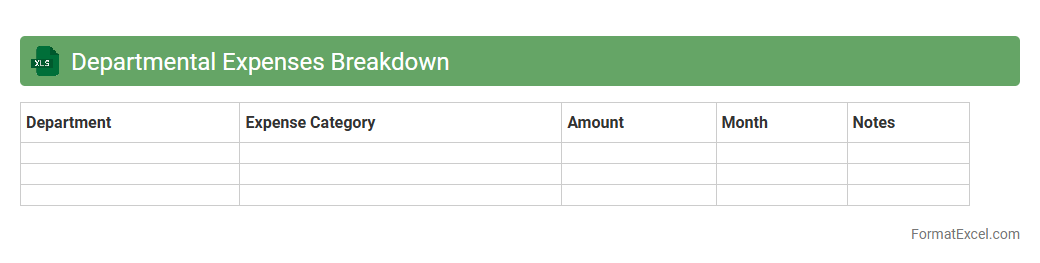
Departmental Expenses Breakdown
The
Departmental Expenses Breakdown Excel document categorizes and details financial expenditures across various departments within an organization, enabling clear visibility into spending patterns. This tool helps management identify cost-saving opportunities, allocate budgets more effectively, and monitor departmental financial performance with precision. By providing a structured overview of expenses, it supports strategic decision-making and enhances overall financial control.
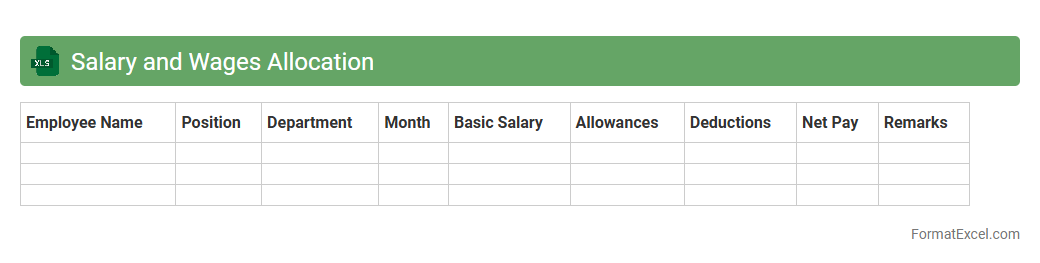
Salary and Wages Allocation
A
Salary and Wages Allocation Excel document is a specialized spreadsheet designed to systematically distribute employee compensation across departments, projects, or cost centers. It helps organizations accurately track labor costs, ensure budget compliance, and streamline payroll management by providing transparent and detailed salary breakdowns. This tool enhances financial planning and reporting by enabling precise allocation of wages, which improves cost control and supports strategic decision-making.
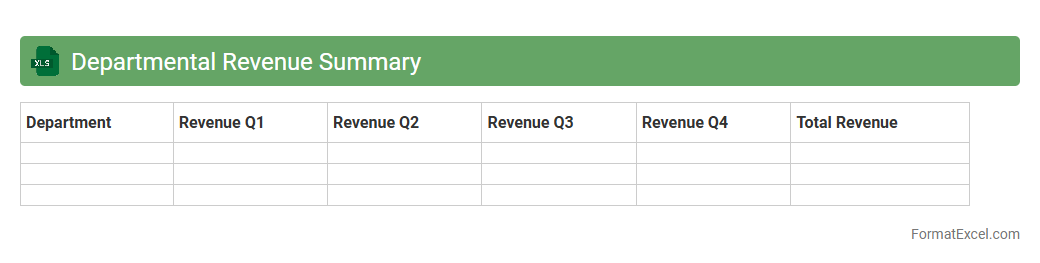
Departmental Revenue Summary
The
Departmental Revenue Summary Excel document consolidates financial data from various departments, providing a clear overview of revenue streams and performance metrics. It is useful for tracking income trends, identifying growth opportunities, and ensuring budget adherence across multiple business units. This tool enables efficient decision-making and supports strategic financial planning by presenting data in an organized, easy-to-analyze format.
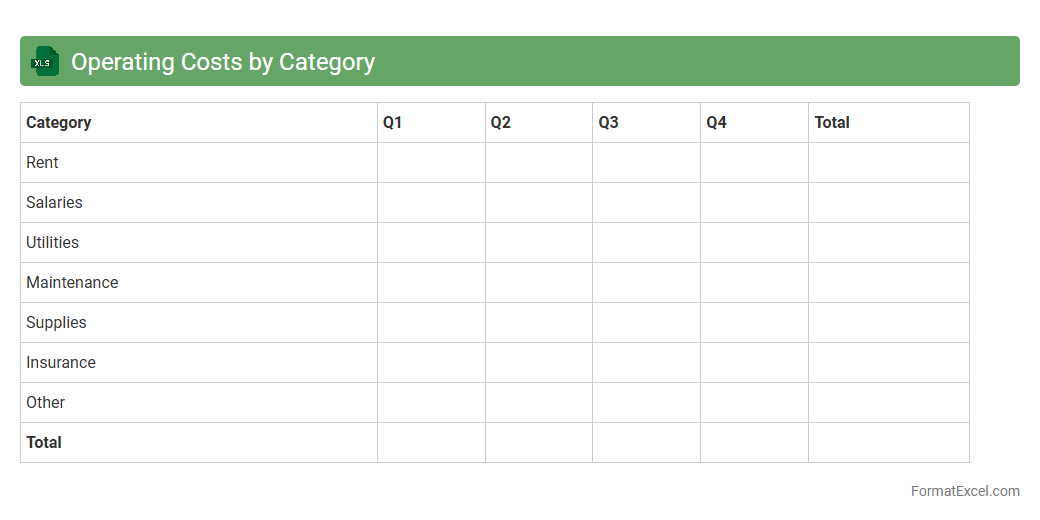
Operating Costs by Category
The
Operating Costs by Category Excel document provides a detailed breakdown of expenses categorized by function, such as labor, materials, utilities, and administrative costs. This structured format enables businesses to track spending accurately, identify cost-saving opportunities, and improve budgeting efficiency. By analyzing these categorized costs, companies can optimize resource allocation and enhance overall financial management.
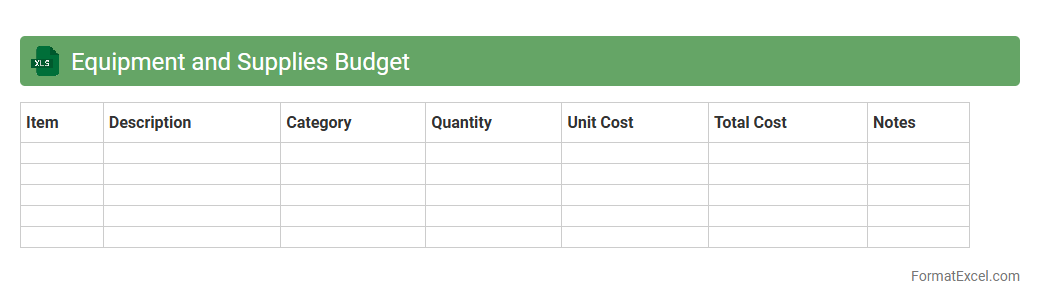
Equipment and Supplies Budget
An
Equipment and Supplies Budget Excel document is a financial planning tool designed to track and manage expenditures related to purchasing and maintaining equipment and supplies. It helps organizations forecast costs, allocate resources efficiently, and avoid overspending by providing a clear overview of budgeted versus actual expenses. This document streamlines financial decision-making, ensuring that procurement aligns with operational needs and budget constraints.
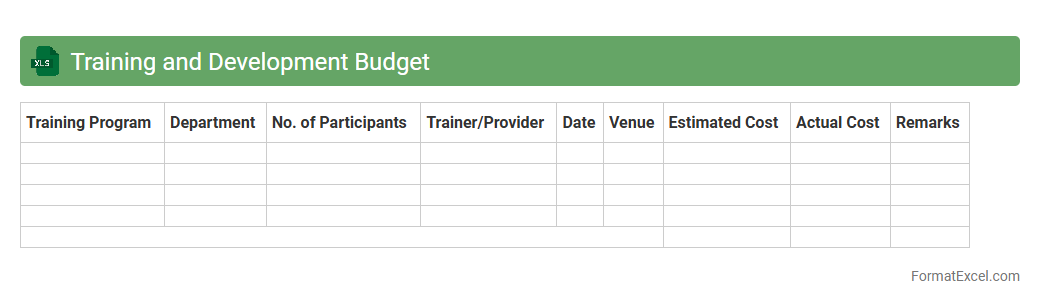
Training and Development Budget
A
Training and Development Budget Excel document is a structured financial tool designed to plan, track, and manage expenses related to employee learning programs, workshops, and skill-enhancement initiatives. It helps organizations allocate resources efficiently by providing clear visibility into costs, enabling better forecasting and cost control. This document is essential for ensuring that training investments align with business goals and maximize return on investment in workforce development.
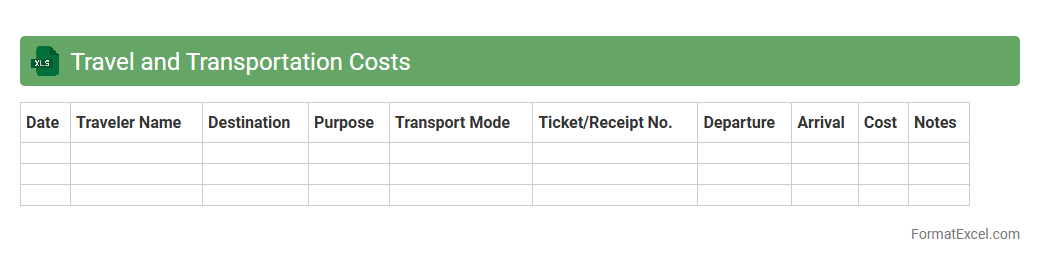
Travel and Transportation Costs
The
Travel and Transportation Costs Excel document is a detailed spreadsheet designed to track and manage expenses related to travel and transportation. It helps users organize costs such as airfare, fuel, accommodation, and daily allowances, enabling clear budgeting and expense analysis. This tool is essential for businesses and individuals aiming to optimize spending, ensure accurate reimbursement, and maintain financial control over travel-related expenditures.
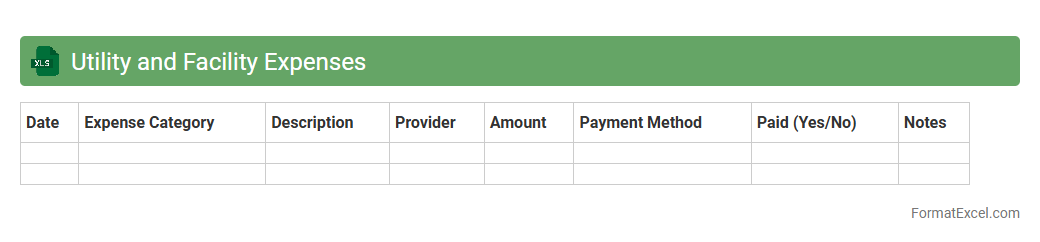
Utility and Facility Expenses
The
Utility and Facility Expenses Excel document is a detailed spreadsheet designed to track and manage costs related to utilities like electricity, water, gas, and facility maintenance expenses. It helps organizations monitor spending patterns, allocate budgets efficiently, and identify cost-saving opportunities. Using this document ensures accurate financial reporting and supports better decision-making for operational cost control.
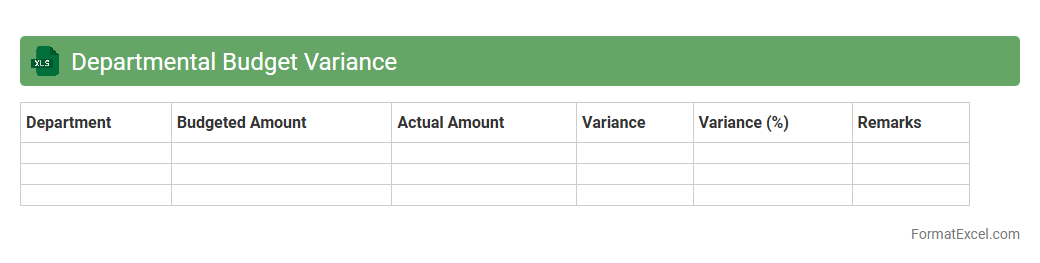
Departmental Budget Variance
A
Departmental Budget Variance Excel document tracks the differences between planned and actual expenses across various departments, allowing organizations to monitor financial performance accurately. It helps identify areas of overspending or underspending, facilitating informed decision-making and efficient resource allocation. This tool supports maintaining fiscal discipline by providing clear, data-driven insights into budget adherence.
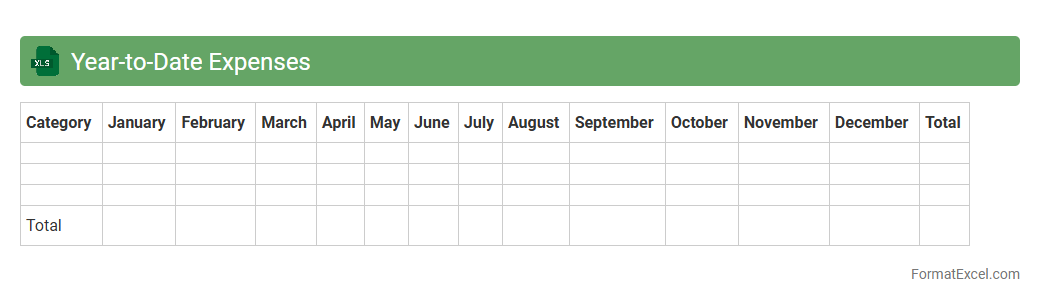
Year-to-Date Expenses
A
Year-to-Date Expenses Excel document is a financial tracking tool that compiles all expenses incurred from the beginning of the year up to the current date, allowing for easy monitoring of spending patterns. It offers clear visibility into budgeting efficiency and helps identify areas where costs can be controlled or reduced. This document is essential for businesses and individuals to maintain accurate financial records and make informed decisions based on real-time expense data.
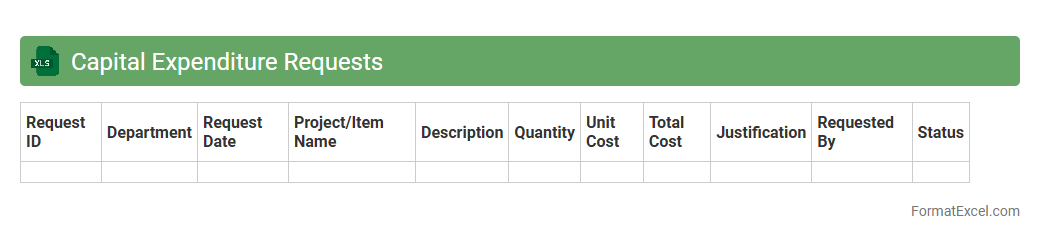
Capital Expenditure Requests
The
Capital Expenditure Requests Excel document serves as a structured tool for tracking and managing proposed investments in fixed assets like equipment, facilities, or infrastructure. It allows organizations to systematically capture, evaluate, and prioritize spending requests, ensuring alignment with budget constraints and strategic goals. Using this document facilitates better financial planning, transparency, and accountability across departments by consolidating all capital expenditure data in one accessible format.
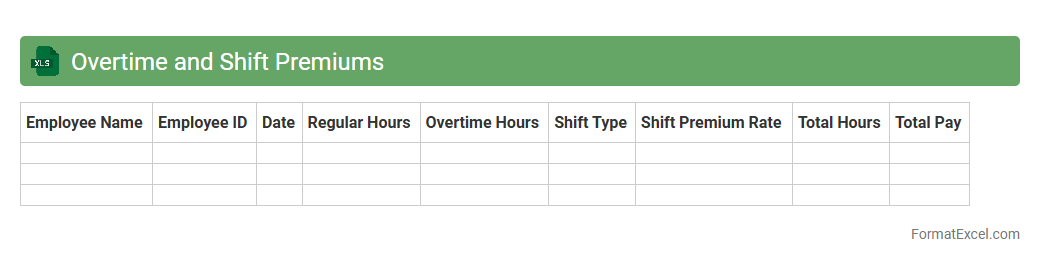
Overtime and Shift Premiums
An
Overtime and Shift Premiums Excel document is a detailed spreadsheet designed to track and calculate additional employee compensation for extra hours worked or shifts outside regular schedules. It automates complex payroll processes by accurately applying premium rates based on company policies and labor laws, ensuring compliance and reducing errors. This tool enhances workforce management by providing clear visibility into labor costs, helping businesses optimize budgeting and payroll efficiency.
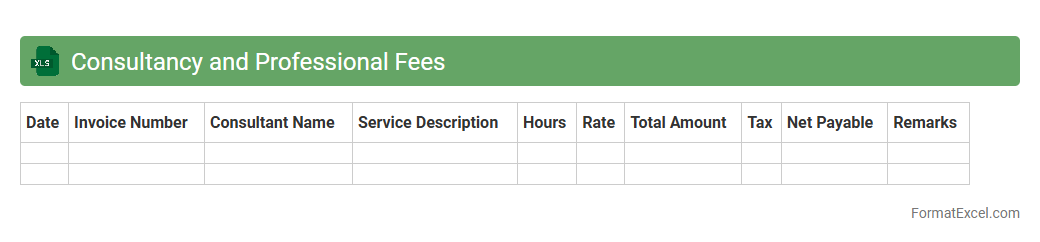
Consultancy and Professional Fees
A
Consultancy and Professional Fees Excel document is a structured spreadsheet designed to track and manage expenses related to consultancy services and professional fees. It helps organizations maintain accurate financial records, monitor budget allocations, and ensure timely payments to consultants or professionals. This tool enhances transparency, simplifies expense analysis, and supports efficient financial planning.
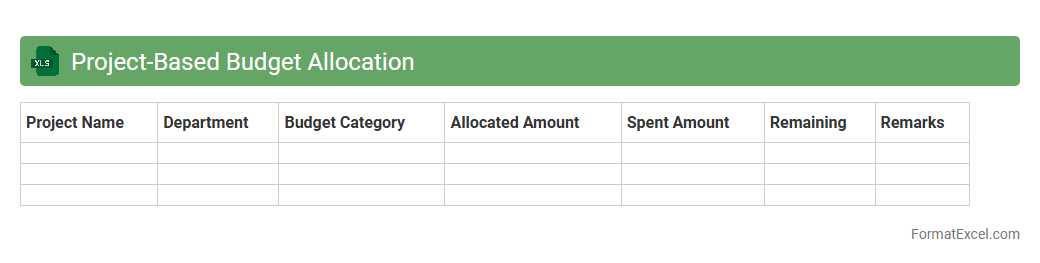
Project-Based Budget Allocation
A
Project-Based Budget Allocation Excel document systematically organizes financial resources by individual projects, enabling precise tracking of expenses and forecasting of costs. This tool enhances budget transparency, supports efficient resource management, and helps prevent overspending by clearly delineating funds allocated to each project phase. Utilizing this document improves decision-making and ensures alignment with financial goals, enhancing overall project success.
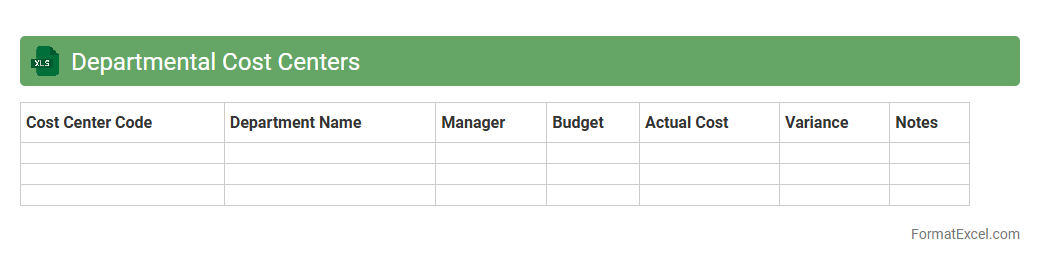
Departmental Cost Centers
The
Departmental Cost Centers Excel document is a structured spreadsheet designed to track and allocate expenses across various departments within an organization. This tool facilitates precise budgeting, cost control, and financial analysis by categorizing costs according to specific functions or units. Using this document helps improve financial transparency, optimize resource allocation, and support data-driven decision-making processes.
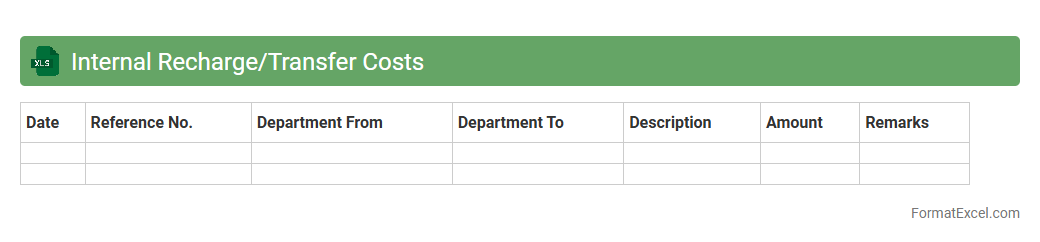
Internal Recharge/Transfer Costs
The
Internal Recharge/Transfer Costs Excel document is designed to track and manage expenses allocated between different departments or cost centers within an organization. It helps ensure accurate financial reporting by detailing transfers of costs, improving budgeting accuracy and internal cost control. This tool facilitates transparency and accountability, enabling better resource allocation and financial decision-making.
Budget Forecast Adjustments
A
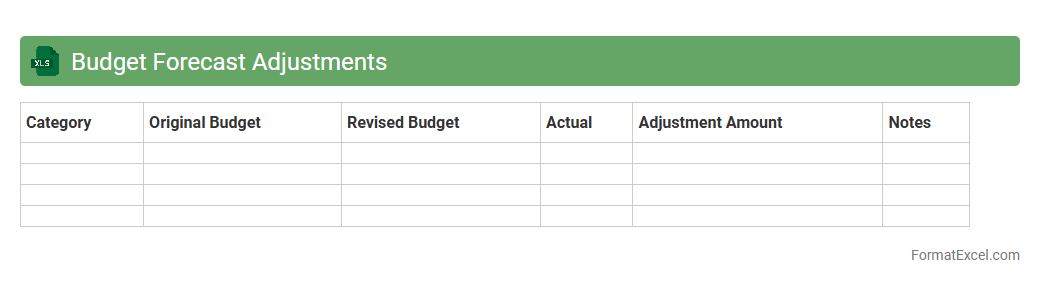
Budget Forecast Adjustments Excel document is a financial tool designed to update and refine budget estimates based on new data or changing business conditions. It allows users to analyze variances, allocate resources efficiently, and improve the accuracy of future financial planning. This document is essential for maintaining fiscal control, optimizing expenditures, and supporting strategic decision-making in organizations.
Expense Approval Tracking
An
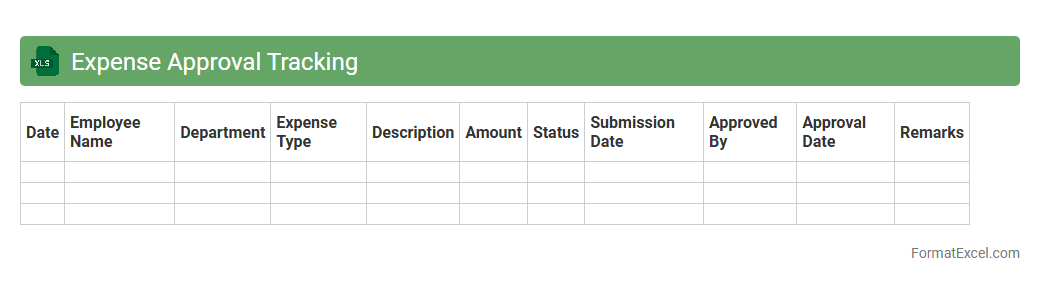
Expense Approval Tracking Excel document is a spreadsheet tool designed to monitor and manage the approval process of business expenses. It helps organizations maintain accurate records of submitted expenses, approval statuses, and payment details, ensuring financial accountability and transparency. By streamlining expense approvals, this document reduces errors, speeds up reimbursement times, and enhances budget control.
Fixed vs Variable Costs
A
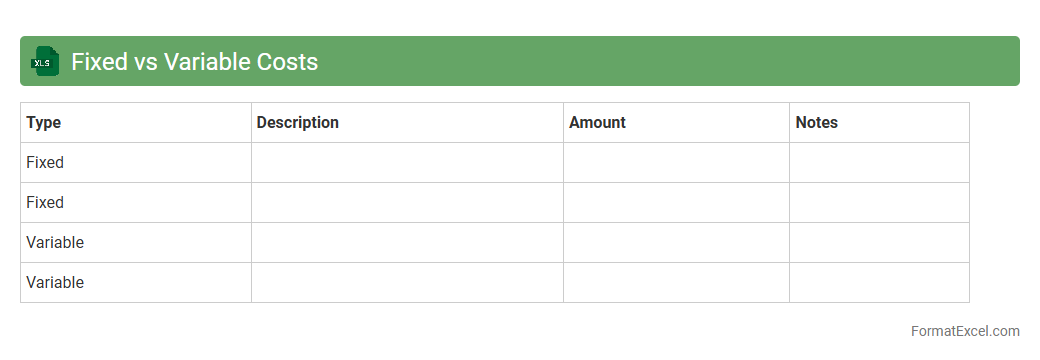
Fixed vs Variable Costs Excel document is a financial tool that helps categorize expenses into fixed costs, which remain constant regardless of production levels, and variable costs, which fluctuate with output. This distinction allows businesses to analyze spending patterns, forecast budget needs, and make informed decisions about pricing, cost control, and profitability. Using this Excel sheet improves financial planning efficiency by providing clear visibility into how costs behave with operational changes.
Monthly Departmental Spend Analysis
The
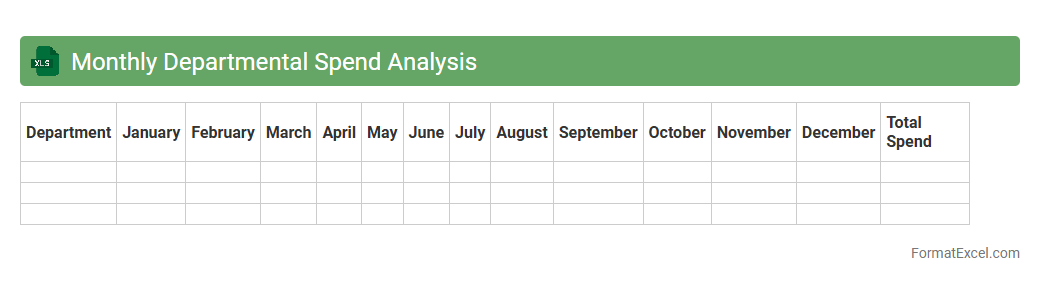
Monthly Departmental Spend Analysis Excel document provides a detailed breakdown of expenses incurred by each department within an organization on a monthly basis. It enables businesses to track budget adherence, identify cost-saving opportunities, and make informed financial decisions by highlighting departmental spending patterns. Using this analysis improves transparency and supports strategic budget planning to optimize resource allocation.
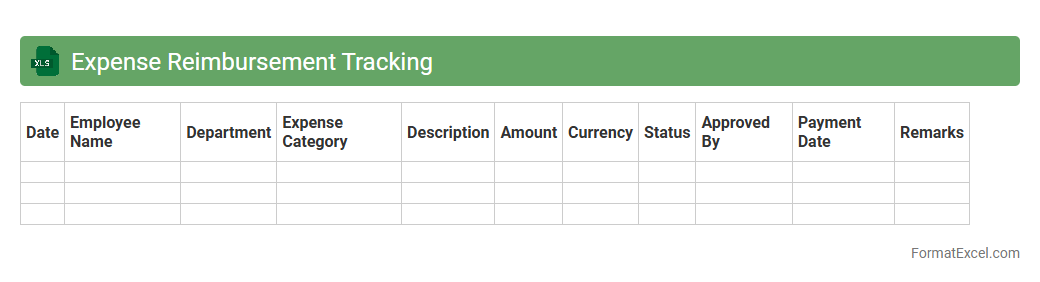
Expense Reimbursement Tracking
Expense Reimbursement Tracking Excel document is a tool designed to record, monitor, and manage all expense claims submitted for reimbursement efficiently. It helps maintain accurate financial records, ensures timely reimbursement, and aids in budget control by providing clear visibility into spending patterns. Using this document improves accountability and streamlines the approval process for
expense reimbursements.
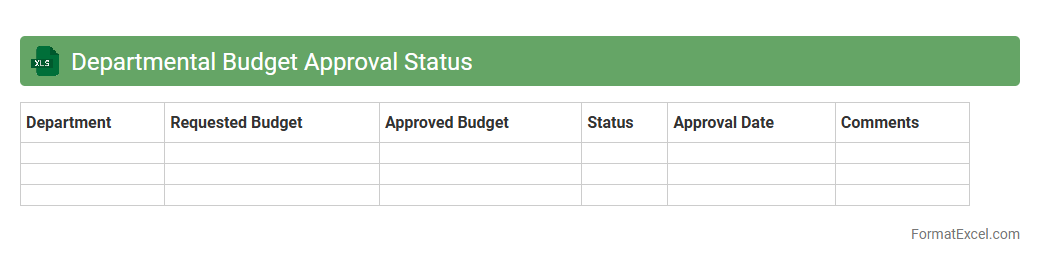
Departmental Budget Approval Status
The
Departmental Budget Approval Status Excel document tracks the progress of budget requests across various departments, displaying approval dates, approvers, and overall status in a clear, organized format. This tool enables streamlined monitoring of financial allocations and helps identify bottlenecks in the approval process, ensuring timely budget approvals. It supports transparent communication between finance teams and department heads, facilitating efficient budget management and resource planning.
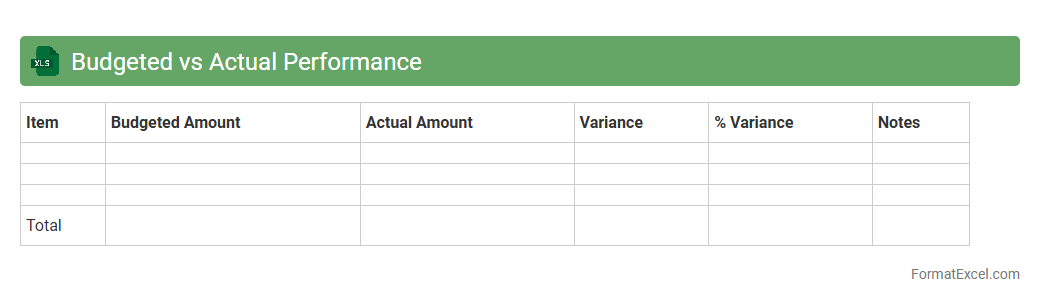
Budgeted vs Actual Performance
A
Budgeted vs Actual Performance Excel document is a financial tool that compares projected budget figures against the actual expenses and revenues over a specific period. This comparison helps identify variances, enabling businesses to monitor spending patterns, control costs, and improve financial forecasting accuracy. Using this document promotes informed decision-making by highlighting areas where performance deviates from the plan, fostering greater accountability and resource optimization.
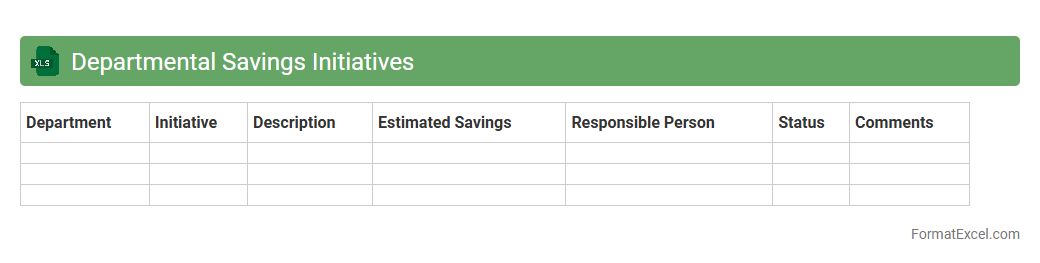
Departmental Savings Initiatives
The
Departmental Savings Initiatives Excel document is a structured tool designed to track, analyze, and manage cost-saving measures across various departments within an organization. It helps identify potential areas for financial efficiency by consolidating data on expenses, budgets, and implemented savings strategies. Utilizing this document enhances decision-making, promotes accountability, and supports strategic planning to optimize overall departmental budgets.
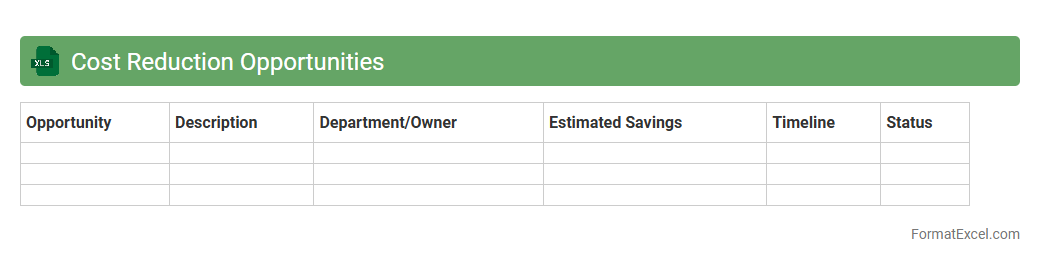
Cost Reduction Opportunities
The
Cost Reduction Opportunities Excel document serves as a strategic tool for identifying, tracking, and analyzing potential areas where expenses can be minimized within an organization. It enables users to systematically evaluate various cost components, prioritize savings initiatives, and monitor the impact of implemented measures over time. This document supports informed decision-making by providing clear visibility into financial performance and fostering a culture of continuous cost improvement.
Introduction to Departmental Budget Format in Excel
The departmental budget format in Excel allows organizations to track their departmental expenses and revenues efficiently. It is a structured tool that helps manage financial planning on a micro-level. Using Excel's functionalities, departments can create clear and concise budget plans.
Importance of Budgeting for Departments
Budgeting is crucial to ensure that each department uses resources wisely and stays within their financial limits. A well-planned departmental budget helps in forecasting expenses and aligning funds with strategic goals. It also promotes accountability and financial discipline within departments.
Key Components of a Departmental Budget
The primary components include revenue estimates, fixed and variable costs, and capital expenditures. Accurate entry of these budget components ensures the budget serves as a reliable financial blueprint. Each section should be detailed to allow precise tracking and adjustments.
Essential Excel Features for Budgeting
Excel offers features like formulas, pivot tables, and charts which enhance budget analysis and visualization. Utilizing Excel functions such as SUM, IF, and conditional formatting can automate calculations and highlight variances. These tools help streamline the budgeting process and improve decision-making.
Step-by-Step Guide to Creating a Departmental Budget in Excel
Start by listing all expected income and expenses. Next, use Excel formulas to calculate totals, differences, and variances. Finally, format your spreadsheet for readability and create charts to visualize financial data effectively.
Sample Templates for Departmental Budgets
Sample templates provide a starting point and save time while ensuring consistency across departments. A good budget template includes predefined categories and formulas to reduce errors. Templates can be customized to fit different departmental needs.
Tips for Customizing Your Excel Budget Format
Adapt your budget by adding or removing categories relevant to your department's activities. Incorporate drop-down lists and data validation for ease of use. Customizing your budget format enhances clarity and usability.
Common Mistakes to Avoid in Departmental Budgeting
Failing to update budgets regularly or overlooking indirect costs are frequent errors. Avoid inaccurate data entry and unrealistic estimations. Maintaining vigilance on these budgeting mistakes ensures better financial control.
Best Practices for Maintaining and Updating Budgets
Regularly review your budget against actuals and adjust forecasts accordingly. Use Excel's tracking features to monitor changes over time. Consistent updates meet financial goals and support informed decision-making.
Conclusion and Additional Resources
Developing an effective departmental budget in Excel requires attention to detail and a clear understanding of financial components. Utilize online tutorials and Excel help forums to enhance your budgeting skills. With practice, Excel becomes an invaluable tool for departmental financial management.